How to Grow Tomatoes: A Complete Guide from Seed to Harvest 2026
- Two Types of Tomatoes: Determinate and Indeterminate
- Recommended Varieties for Beginners
- Two Planting Methods
- 1. Getting Started—Site Selection and Seedling Care
- 2. Planting Spacing and Soil Preparation
- 3. Planting Depth and Method
- 4. Setting Up Supports
- 5. Watering Methods
- 6. Mulch
- 7. Fertilization Methods
- 8. Pruning Methods
- 9. Harvesting and Storage
- 10. Benefits of Crop Rotation
- 11. Common Problems and Solutions
- Quick Q&A
Nothing is more satisfying than learning how to grow tomatoes and taking a bite out of one you’ve grown yourself—one that ripened naturally on the vine. Growing tomatoes isn’t as hard as you might think—as long as you follow the right methods, you can enjoy a bountiful harvest of delicious tomatoes, whether you have a spacious backyard or a small balcony. Tomatoes are the most popular vegetable for home gardening across the United States, and today, I’m going to share all the secrets from planting to harvest with you.
Two Types of Tomatoes: Determinate and Indeterminate
Before you start planting, you need to understand the two basic growth types of tomatoes.
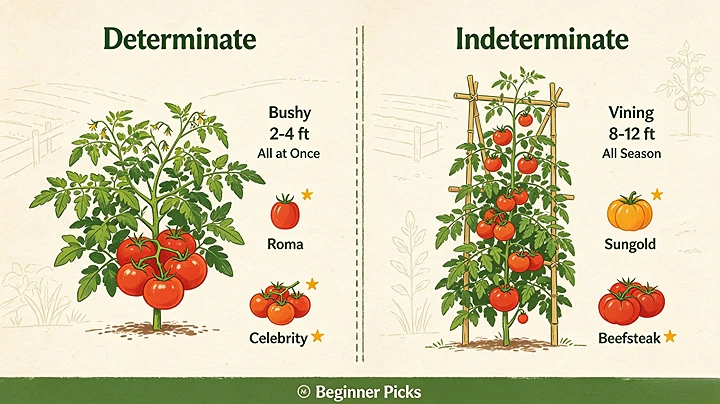
- Determinate tomatoes grow in a compact manner, with plants typically reaching a height of 2 to 4 feet. Once they reach a certain height, they stop growing and then flower and produce all their fruit within a relatively short period. These tomatoes have a concentrated harvest window, making them ideal for canning or a single, large-scale harvest. Because the plants are relatively short, they’re perfect for growing in containers or small gardens.
- Indeterminate tomatoes are quite different—they continue to grow, flower, and set fruit until the first fall frost arrives. The vines of this type of tomato can grow 8 to 12 feet tall, or even higher. Their harvest season can last 2 to 3 months, allowing you to enjoy a steady supply of fresh tomatoes all summer long. However, these tomatoes require sturdy stakes or cages for support and need more space.
Recommended Varieties for Beginners
If you’re trying your hand at growing tomatoes for the first time, it’s best to start with varieties that are easy to care for and disease-resistant. Here are a few tried-and-true, beginner-friendly options:
- Celebrity — A hybrid variety that is highly disease-resistant and very easy to grow
- Sungold — An orange cherry tomato that is extremely high-yielding, has outstanding flavor, and is particularly easy to grow
- Bush Early Girl — An early-maturing variety that can be harvested in about 65 days
- Patio F Hybrid — Ideal for container gardening; matures in about 70 days
- Fourth of July — An early-maturing slicing tomato; indeterminate variety; ready for harvest in about 7 weeks
Top Tip: Cherry tomato varieties are usually the safest choice for beginners—they’re not only high-yielding but also more forgiving of minor mistakes during the growing process.
Two Planting Methods
There are two main ways to grow tomatoes:
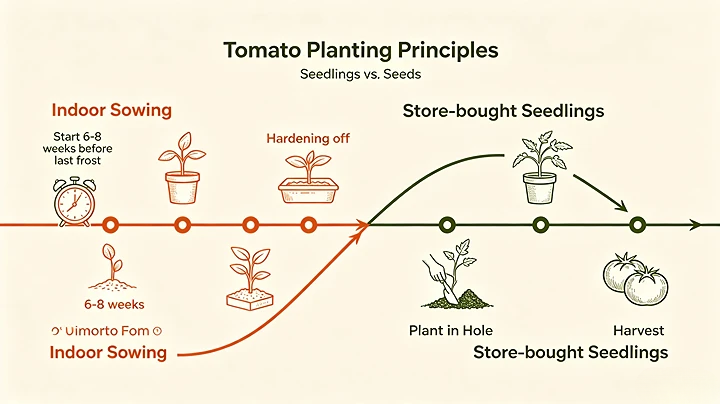
- Method 1: Buy seedlings and plant them directly. This is the simplest and quickest method. In the spring, visit your local garden center or farmers’ market to purchase healthy tomato seedlings, then transplant them directly into the ground or into containers.
- Method 2: Start from seed indoors. This method takes a little more time (it involves an extra step of sowing seeds indoors and transplanting them once they’ve sprouted), but it offers a much wider variety of cultivars to choose from and is more cost-effective.
Regardless of which method you choose, the subsequent planting and care steps are the same.
1. Getting Started—Site Selection and Seedling Care
Where to Plant Tomatoes
Choose a sunny spot—tomatoes need at least 6 to 8 hours of direct sunlight each day. The soil should be loose and well-drained.
How to Grow Tomatoes from Seeds
Start sowing indoors 6 to 8 weeks before the last spring frost date.
Sowing Instructions:
- Use sterile potting mix specifically for seedlings (do not use garden soil)
- Sow seeds about ¼ inch deep into the soil
- Keep the soil moist but not waterlogged
- Maintain a germination temperature of 70–80°F; seeds will sprout in about 7 to 14 days
- Once seedlings emerge, the temperature can be lowered to 65–70°F
- Provide 14 to 16 hours of light daily (use grow lights or a bright south-facing window)
- Hardy the seedlings for one week before transplanting to gradually acclimate them to outdoor conditions
How to Grow Tomatoes in Pots
Tomatoes can definitely be grown in pots. However, the following conditions must be met:
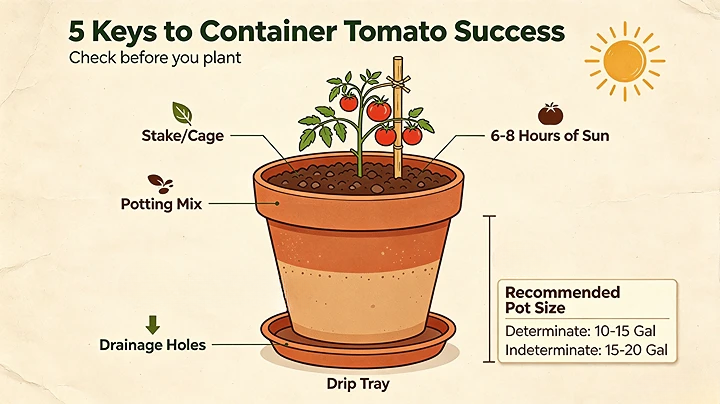
- The bottom of the container must have drainage holes.
- Use high-quality, loose, and well-draining potting soil.
- Place a tray under the pot to catch excess water.
- Container size: 10–15 gallons for determinate varieties; 15–20 gallons for indeterminate varieties.
- Place the container in a spot that receives 6 to 8 hours of sunlight daily
- Keep the soil consistently moist (soil in containers dries out faster than soil in the ground)
2. Planting Spacing and Soil Preparation
Planting Spacing
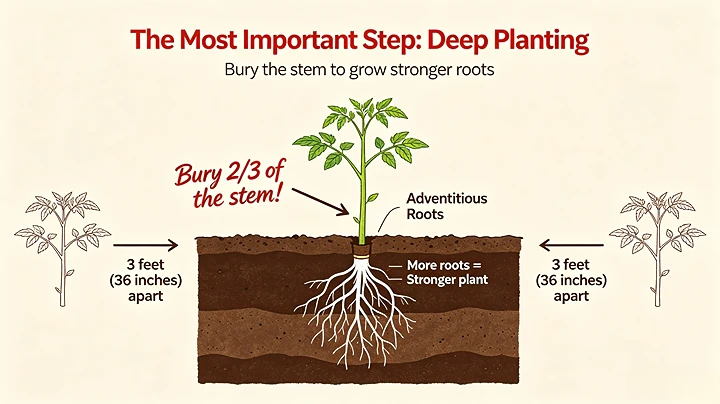
When planting in the ground, leave about 3 feet (approximately 36 inches) between each tomato plant to give each plant enough room to grow. A spacing of 4 to 6 feet between rows is recommended.
Soil Preparation
- Soil pH: Recommended range is 5.5 to 7.5
- Mix a calcium-rich fertilizer into the soil before planting—this effectively prevents blossom end rot
- Add compost and well-rotted manure to increase soil organic matter
- Dig planting holes about 3 to 4 inches deep
3. Planting Depth and Method
This is the most important step in growing tomatoes—tomatoes have a unique characteristic: they grow new roots from their stems.
When planting, bury two-thirds of the seedling’s stem in the soil. To do this, remove the lower leaves and bury most of the stem underground. The deeper you plant it, the more roots will grow, and the stronger the plant will be.
Water thoroughly immediately after planting to help the seedling establish itself.
4. Setting Up Supports
Install supports at planting time or immediately afterward, rather than waiting until the plants have grown—this helps avoid damaging the root system.
- Determinate varieties: Can be supported with tomato cages or short stakes
- Indeterminate varieties: Require sturdier support, such as tall stakes, large tomato cages, or trellises
- Creative options: Try various structures like tomato ladders, spiral supports, or A-frames
- Secure the plants to the support using soft ties, twine (tied in a figure-eight knot), or Velcro plant ties
5. Watering Methods
Regular watering is key to success. Tomatoes need about 1 to 1.5 inches of water per week.
- Increase watering during the summer—container-grown tomatoes may need daily watering in hot weather.
- We recommend using a telescoping hose or a sprinkler with a nozzle for easier flow control.
- Watering time: It’s best to water in the early morning to avoid fungal or bacterial diseases caused by evening watering.
- Deep Watering: Water thoroughly each time to encourage deep root growth
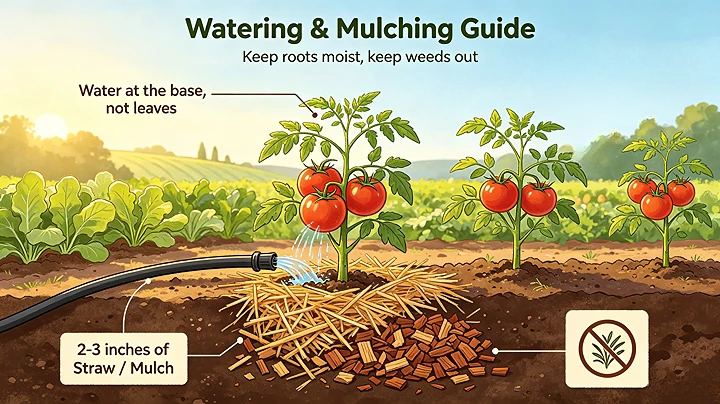
- Avoid Wetting Leaves: Aim water at the roots rather than the leaves to reduce the risk of disease
Top Tip: If your area experiences frequent summer droughts, or if you often forget to water, use a soaker hose or drip irrigation system to keep the soil evenly moist. This not only prevents fruit cracking but also helps prevent blossom end rot.
6. Mulch
Apply a 2- to 3-inch-thick layer of mulch (such as straw, grass clippings, black plastic sheeting, or shredded bark) around the base of the plants.
Benefits of mulch:
- Reduces weed growth
- Maintains consistent soil moisture and prevents drastic fluctuations in moisture levels
- Prevents soil from splashing onto leaves, reducing the spread of disease
- Black plastic sheeting also raises soil temperature, allowing you to plant 1 to 2 weeks earlier
7. Fertilization Methods
Tomatoes do not require frequent fertilization. The following schedule is recommended:
- At planting: Mix one shovelful of 4-6-6 or another balanced fertilizer into the planting hole.
- Fertilize twice during the growing season: once two weeks after planting, and again when fruit begins to set.
- Use organic fertilizer, fish emulsion, or seaweed emulsion.
- Avoid high-nitrogen fertilizers—excess nitrogen promotes leaf growth at the expense of fruit development.
8. Pruning Methods
Pruning methods depend on the type of tomato:
Determinate tomatoes: Require almost no pruning. Simply remove any branches or leaves near the ground that drag on the ground. Excessive pruning can reduce yield.
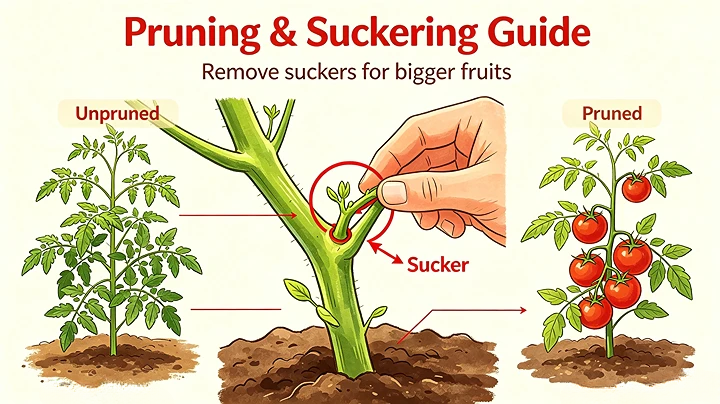
Indeterminate tomatoes: Require regular pruning. The main task is to remove suckers (suckers)—that is, small shoots growing at the angle between the main stem and side branches. Removing suckers helps:
- Allow the plant to focus its energy on the fruit
- Make trellising easier
- Improve air circulation and reduce disease
Note: Do not remove too many leaves—keep enough leaves to shade the fruit and prevent sunscald. If you find unhealthy or diseased leaves, remove them immediately.
9. Harvesting and Storage
How to Tell When Tomatoes Are Ripe
Ripe tomatoes have a rich, even color (red, yellow, orange, or purple, depending on the variety) and feel slightly soft when gently pressed. Ripening times vary greatly among varieties, ranging from 60 to 85 days or even longer.
How to Harvest
Use pruning shears to cut the fruit stem cleanly rather than pulling it off forcefully to avoid damaging the plant. Harvesting ripe tomatoes promptly relieves the plant of the strain caused by overly heavy fruit.
How to Store
- Room Temperature Storage: Place unripe tomatoes at room temperature to continue ripening; do not refrigerate—cold temperatures will ruin the flavor.
- Refrigerator Storage: If you have more fully ripe tomatoes than you can eat, store them in the refrigerator, but it’s best to let them return to room temperature before eating.
- Long-Term Storage: You can make tomato sauce, can tomatoes, or freeze them for long-term storage.
10. Benefits of Crop Rotation
Do not plant tomatoes in the same spot year after year.
The benefits of crop rotation include:
- Reducing the accumulation of soil-borne diseases (such as early blight)
- Preventing soil nutrients from being over-depleted by a single crop
- Controlling pests—pests lose their steady food source
- Improving soil structure
Recommendation: Rotate planting locations at least every 3 to 4 years, and avoid growing Solanaceae crops—such as tomatoes, potatoes, peppers, or eggplants—in the same plot consecutively.
11. Common Problems and Solutions
Blossom End Rot
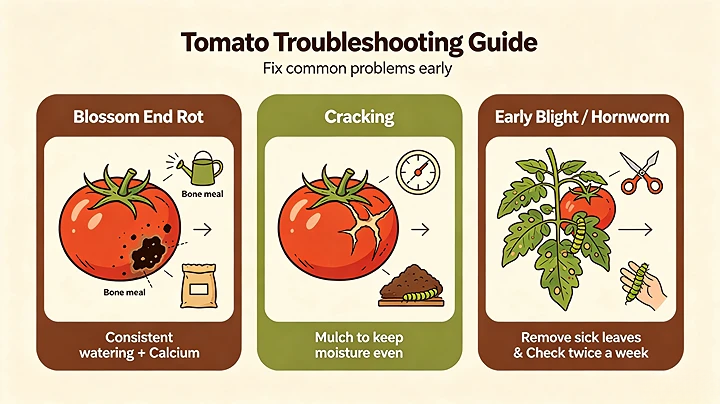
Symptoms: Sunken greenish-brown to black spots appear at the base of the tomato
Cause: Calcium deficiency, usually caused by uneven watering that prevents calcium from reaching the fruit
Solutions:
- Maintain consistent, even watering
- Mix bone meal, crushed eggshells, or calcium-rich fertilizer into the soil
- Apply mulch to retain soil moisture
- Promptly remove and discard affected fruit
Tomato Fruit Cracking
Symptoms: Radial or ring-shaped cracks appear on the fruit’s skin
Cause: Sudden heavy watering or rainfall following a prolonged drought causes the fruit to expand rapidly, leading to skin rupture
Solutions:
- Maintain consistent soil moisture and avoid drastic fluctuations between dry and wet conditions
- Water regularly, especially during fruit development
- Use mulch to regulate soil moisture
- Harvest ripe fruit promptly
Early Blight
Symptoms: Brown spots appear on leaves; in severe cases, this leads to leaf drop
Preventive Measures:
- Plant disease-resistant varieties
- Practice crop rotation
- Maintain proper plant spacing to improve air circulation
- Cover the soil to prevent splashing of pathogens onto leaves
- Avoid wetting the leaves when watering
Treatment: As soon as early symptoms appear, immediately prune off all leaves within 12 inches of the ground. Disinfect pruning tools with a solution of 1 part bleach to 9 parts water. Do not remove more than 20% of the plant’s total foliage.
Tomato Hornworm
Symptoms: Sudden, massive loss of leaves; large green caterpillars appear on the plants
Control Methods:
- Hand-pick—place in soapy water to kill them
- Use BtK (Bacillus thuringiensis) spray—organic and effective
- Neem oil spray
- Inspect plants at least twice a week during the summer
Quick Q&A
Q: When to grow tomatoes?
A: It depends on your USDA hardiness zone
| USDA Zone | Indoor Sowing Time | Outdoor Transplanting Time |
| Zone 3 | Mid-March–Early April | Late May–Early June |
| Zone 4 | Early March–Mid-March | Early–Mid-May |
| Zone 5 | Late February–Early March | Late April–Early May |
| Zone 6 | Mid-Late February | Mid–Late April |
| Zone 7 | Late January–Early February | Early April |
| Zone 8 | Mid-January–Late January | Mid-March–Late March |
| Zone 9 | Early January | Late February–Early March |
| Zone 10 | Early December | Early February |
General Rule: Wait to transplant until the soil temperature reaches at least 60°F and nighttime temperatures consistently stay above 50°F. Planting too early is actually worse than planting a little later—tomatoes planted in cold soil will fail to develop properly.
Q: How much sunlight do tomatoes need?
A: At least 6 to 8 hours of direct sunlight per day.
Q: What is the planting spacing for tomatoes?
A: About 3 feet (36 inches) apart in the ground. Row spacing should be 4 to 6 feet.
Q: Do they need stakes or cages?
A: Absolutely! Indeterminate varieties, in particular, need sturdy support. Determinate varieties also need some support to prevent the fruit from breaking the branches. Set up the supports at planting time to avoid damaging the roots later on.
Q: How deep should I plant them?
A: Bury two-thirds of the stem; the tomato will grow new roots from the buried portion.
Q: How long do tomatoes take to grow? How long does it take to grow tomatoes?
A: About 60 to 85 days from transplanting to harvest, depending on the variety. If starting from seed, it takes 65 to 130 days.
Q: Can you grow tomatoes indoors?
A: It can be successfully grown indoors as long as the right conditions are provided.
Q: Can you grow tomatoes in a pot?
A:Tomatoes can grow exceptionally well in pots, as long as the five key requirements for growing tomatoes in pots are met.
Now you’ve mastered all the essentials of growing tomatoes—from choosing varieties to harvesting fruit, and from common problems to their solutions. Take action now and plant a few tomato plants in your backyard or on your balcony. In a few months, you’ll be able to savor the exceptional flavor of America’s most popular home-grown vegetable. Trust me, homegrown tomatoes really do taste different!